Ask a partner how long vouching takes on a typical statutory engagement and you will usually get a shrug and a number that came from feel: “a few days, depends on the client.” The budget is rarely written down, which is exactly why it quietly eats the file. So here is the honest arithmetic — where the time actually goes, why it balloons, and what genuinely compresses it.
The steps nobody puts in the budget
Vouching is remembered as “check the invoice against the ledger.” In practice, the checking is the short part. The full cycle on a revenue tie-out looks like this:
- Standardize the client’s GL. The ledger arrives as a PDF export, a multi-tab workbook with a sheet named “adj — DO NOT USE”, or both. Before anything can be sampled, someone converts it into one clean working format. On a messy file this alone is half a day to two days.
- Map and reconcile. Every line tagged to the firm’s chart of accounts, closing balances agreed to the TB.
- Draw the sample. Build the cumulative column, compute the interval, select the items — usually by hand in Excel.
- Pull the documents. Chase the PBC list, match invoice numbers to PDFs, re-request the ones that are missing or illegible.
- Check each item. Amount, date, customer name, and whether the amount is genuinely revenue or a pass-through.
- Write up exceptions, tie out, format the workpaper. The totals must re-add; the workpaper must follow the firm’s template.
The per-item math
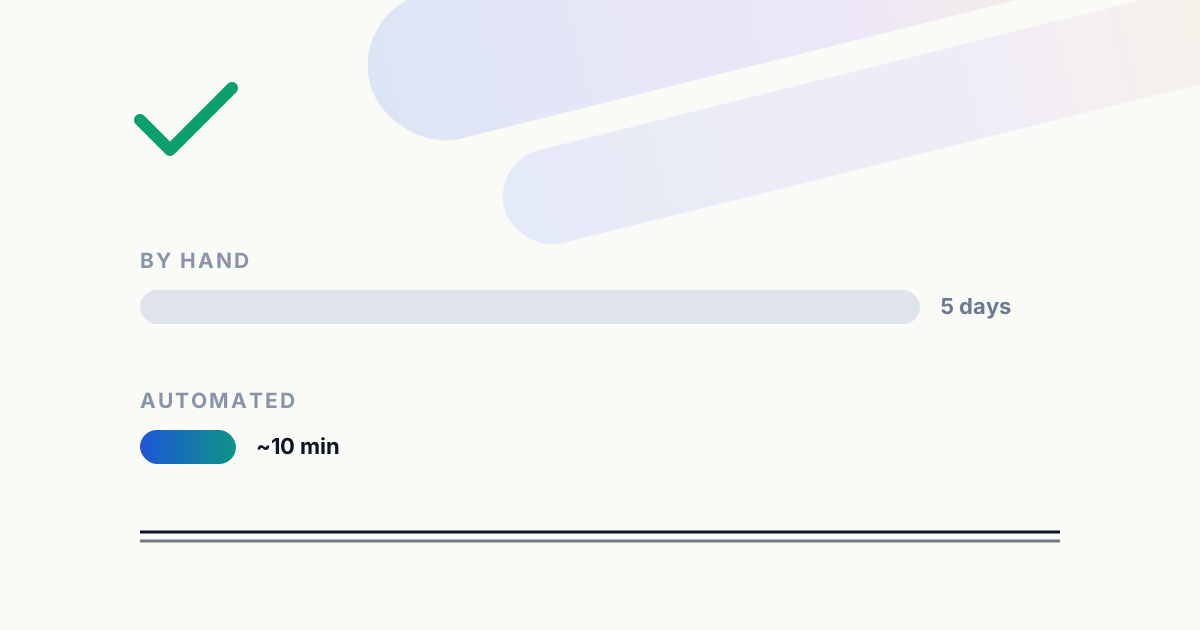
Take a realistic mid-size engagement: a GL of around four thousand lines and a monetary unit sample of about forty invoices. At six to ten minutes per item — finding the document, reading it, agreeing three fields, noting the result — the pure checking is five to seven hours. That sounds manageable, until you add the standardizing, the document chasing, the interruptions, and the write-up. The realistic total for one junior, on one section, is most of a working week. Partners who track it honestly land in the same place.
Why the budget always overruns
Two reasons, and neither is laziness.
First, fatigue is a data-quality problem. By the ninth hour of agreeing amounts and dates, transposed digits and near-identical customer names slip through. Those errors surface at review — which triggers a rework loop that costs more than the original check did.
Second, busy season punishes context-switching. The junior doing your vouching is also fielding three other engagements. Every interruption costs the re-orientation time of finding where they were in a four-thousand-line ledger.
The checking is cheap. The re-checking, at 11pm, after review found the third careless error — that is what the budget never priced in.
What actually compresses it
- PBC discipline. A document request list that names invoice numbers, not “sales invoices for the year”, kills most of the chasing.
- One canonical working format. Firms that standardize every GL into the same shape before fieldwork stop paying the messy-export tax on every section.
- Automating the mechanical layer. Standardizing, sampling, field-matching and tie-outs are deterministic work. Software does not get tired at line 3,000.
What automation realistically delivers
This is the layer Audeet was built for. On pilot engagements of roughly that shape — around four thousand GL lines, forty-odd sampled invoices — the full cycle runs end to end in about ten minutes once the client’s documents are in: ingest, standardize, map, sample, vouch, tie out. Heavier files take longer — minutes longer, not days. The output is a workpaper in the firm’s own template, with every exception flagged in plain English for a human to judge.
That last part matters. The realistic promise of automation is not “no humans.” It is that your people stop doing the six-minute checks and start doing only the judgment calls — the exceptions, the review, the sign-off. The week goes back into the budget; the judgment stays with the auditor.